
Root, Branch and Devotion
On learning to be at home

I am and have always been a hedgewitch — a woman who lives at the edge and whose being insists on a rooted relationship with place, ancestors, myth and magic. But it has taken a long time to get here, to the House at the Edge of the Woods...and to being at home.
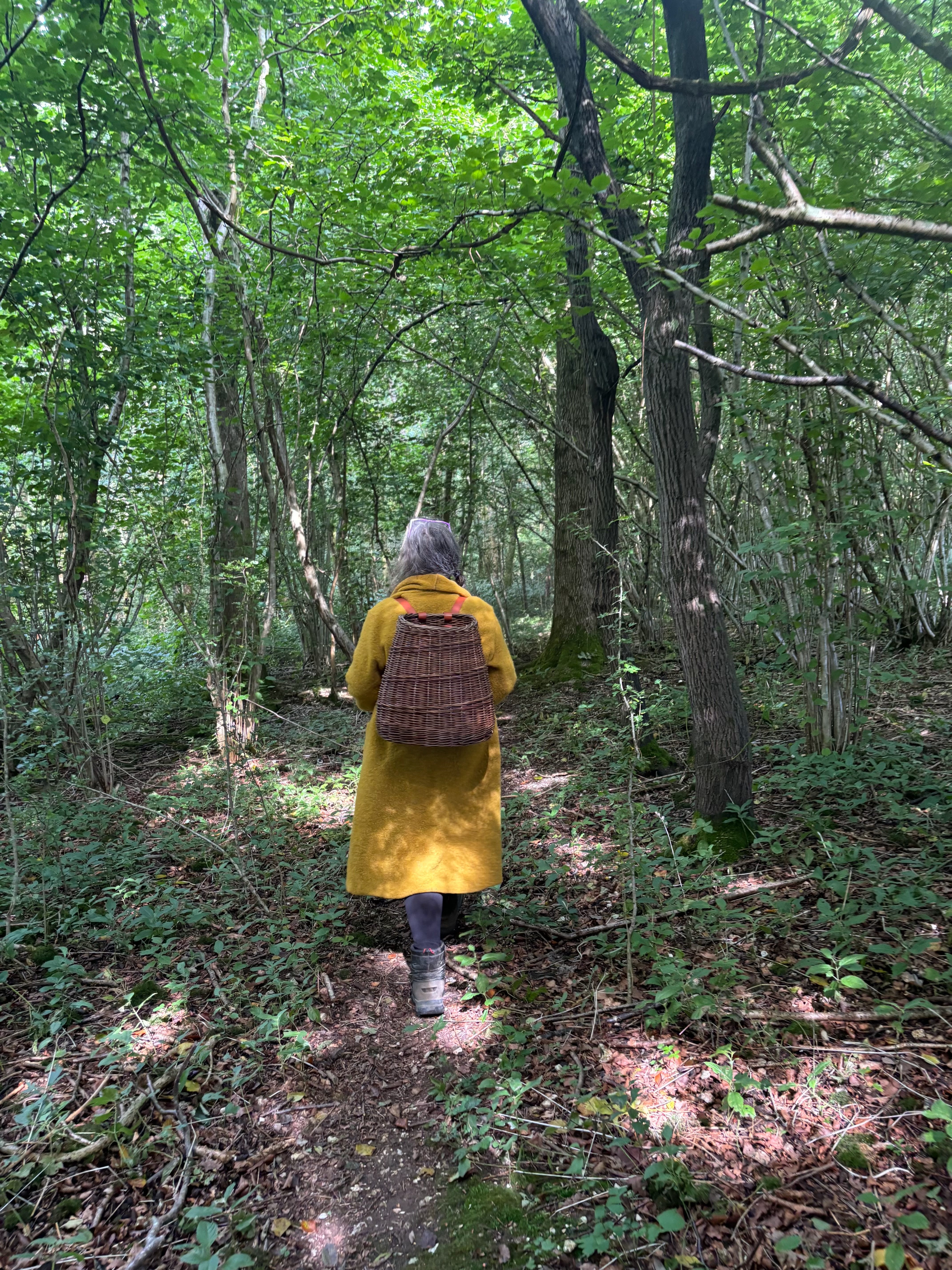
For years I moved around relentlessly. Like most of us born in this part of the world, I was planted and grown in a culture that craves the fast road and the adventure. The orientation of my life was seeker, searcher, itchy-footed and always looking for a better day, a better place, a better me.
And twelve years ago my life turned upside down, and the journey here began. In 2014 my husband’s cancer was diagnosed as terminal. He wasn’t going to get better, and all the assumptions my life was propped up with were suddenly laid bare for the spindly, fragile things they really were. I had planned that we would grow old together, that we would live in Switzerland, where we had moved some years before, surrounded by grandchildren. I lived securely in the belief that we had all the time in the world to experience life unfolding together. I had assumed that these things were all a given, an inevitability, and that my happy-ever-after was already in the bag.
The seven years that followed included the heartbreaking year of nursing my beloved through the end of his breathing days on this earth, and the being-on-my-knees, “I can’t go on I’ll go on,” first few years of grieving.
I moved back from Switzerland a year after Richard died, back to Southsea where we still had our family home. I had never wanted to live back in the UK, but I realised that I really needed to be around people who had known me all my life, and for the first time since I had settled by a lake in Switzerland six years previously, I missed home. I also desperately needed people who had stories of Richard, memories that were not just mine — people who could share the responsibility for missing him out loud and re-membering him. My heart was in shatters and I needed to be in places and with people where both our roots went much deeper.
My friends came to help say goodbye to my home — to the room where we had last danced, where we last made love, the place where Richard spoke his last words and took his last breath. I flew back to the UK weeping, and as I stepped out of the taxi a wave of greeting rose up through my body. My feet touched the ground and I was amazed to know that the pavements were glad to see me. The unholy concrete, the streets and the places I said I would never go back to because Lake Geneva and the mountains had my heart and were so much more beautiful — all these places that I had cast off in favour of somewhere more lovely welcomed me back with warmth and a gentle greeting.
“Hello,” they said. “We are glad you came back. You are home now.”
I wept with relief, and for the first time ever I experienced a deeply felt sense of the truth that everything — every thing — is alive. This wasn’t exactly news to me; I have always known this to be true, ever since I was a small child, but previously the aliveness was only really true for things I considered to be ‘natural’: trees, plants, rivers and mountains — these were all certainly alive.
But asphalt? Concrete? Wooden gates? Door handles? Light switches? Things ceased to be things in that moment and from then on EVERY THING (not things at all in fact) was truly and certainly alive.
Soon after I got home, following instruction I received in a meditation and without knowing anything about taking care of trees, I bought eleven acres of ancient woodland about half an hour out of the city. I spent the next five years living/not living in our old house, often times undone by grief and finding sustenance in my visits to the woods.
Slowly I was falling into a deep entanglement with the place.
I learnt to coppice, and a community of people that loved and tended to the woods alongside me started to grow.
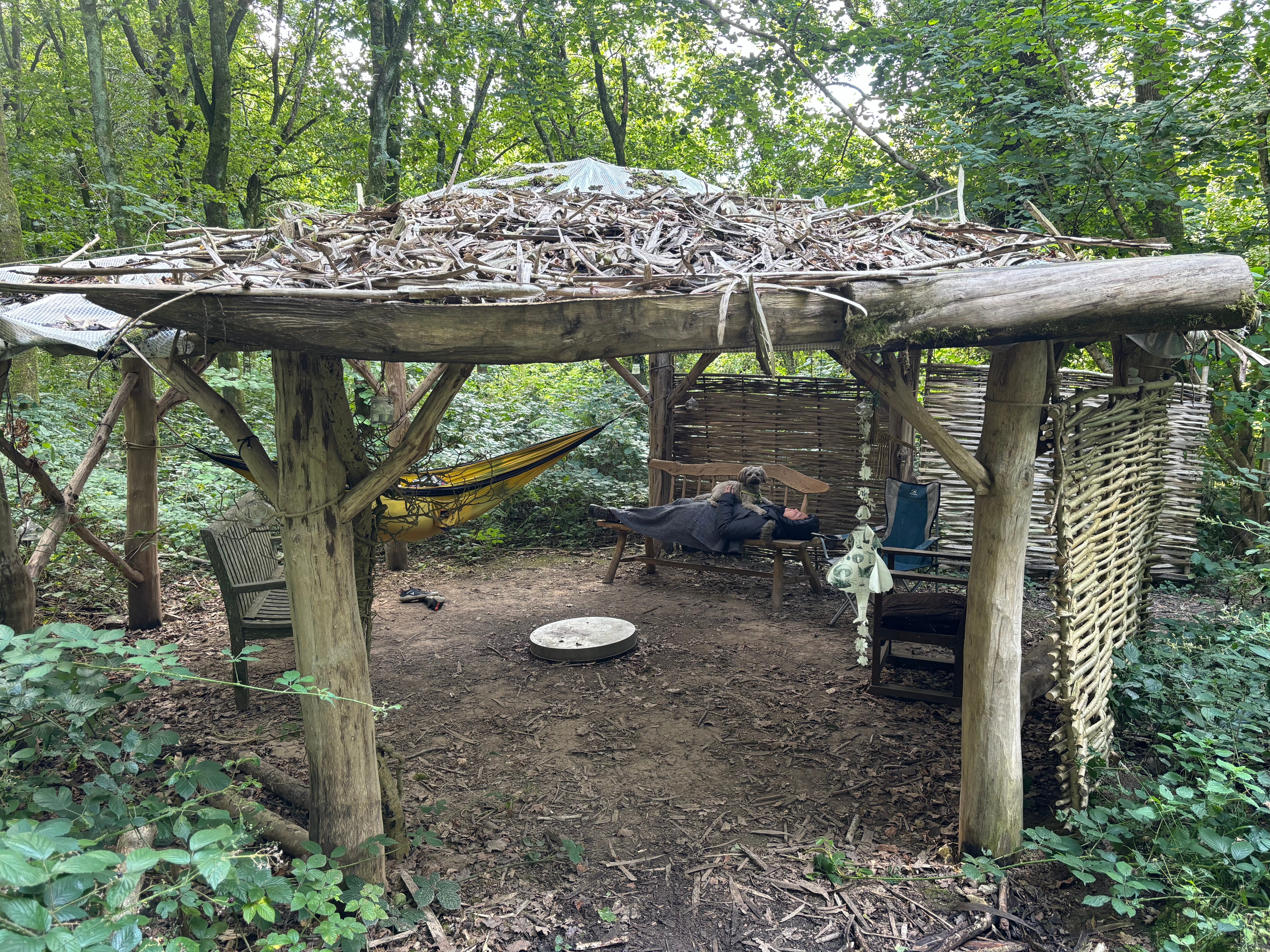
Monthly gatherings, storytelling and ceremony, a green woodworking workshop and community forge — all these things were growing in the place and it was wonderful. Five years went by grieving, weeping, storying and community gathering, shape-shifting and being pulled deeper into relationship with the woods.
And yet — for some bizarre reason I kept trying to buy houses in other places. I cannot explain what possessed me — probably the death throes of that old itchy-foot syndrome — but I tried to buy three houses in Wales, two at auction, one on the Isle of Wight and another not far from where I eventually landed. Each time I was scuppered, outbid, outmanoeuvred, relieved…and confused.
Eventually I submitted and committed to staying still. I agreed that I would not move anywhere unless it was really close to the woods — a 15-minute drive was my maximum distance. I had already sold my house and was preparing myself for some time living in my van and for waiting… trusting that my decision to stay, to allow myself to be rooted and claimed by this place, by these trees and by the people who had started to gather around them, would work out.
And of course, very quickly after I had given up, it happened — a home, just a 15-minute walk from the woods, showed up.
The owners agreed to sell it to me before it even went on the market and I sank my hands into the earth and whispered “thank you.” I gathered up the baskets of apples that were ripening and rejoiced in being able to visit the woods almost daily — tending my garden, growing my food and gathering my herbs.
I was no longer living in the city and just visiting this other woodsy life of mine. Now my hands turned daily to ancient spiritual and ecological practices that connect me to an old, old story of people in this place — things like coppicing the hazel, foraging mushrooms, gathering nettle seeds and making apple scrap vinegar.
Practices that connect me to my ancestors, to this soil, to the herbs and trees of this particular place — along with rituals and ceremonies that weave me and my days into the cycles of the seasons and the moon. Wild food, kitchen witchcraft, soil tending and beauty making. My hair has twigs in it most of the time and my pockets are full of seeds, bones and feathers.
I have of course grown older in the ten years since my beloved died. I am greyer and my bones and joints often ache after a day working in the garden or with the trees. But I have a community of good people around me and some fine and wonderful women who I sit around the fire with on full moon nights and who help keep my body and heart together.
I am beyond lucky. Of course, I have worked hard to gather them in and to listen and to make kin with this living world. And I have been so unbelievably fortunate too.
I count my remaining years in seasons, harvests of wild garlic and blackberries, delighted every time I get another chance to pick apples from my favourite tree, and grateful every time I walk to the woods after a big storm and see that the old beech tree is still standing.


And finally….
This month I have been learning this beautiful poem. If you want to hear it spoken out loud, as poetry really should be, then I highly recommend listening to this beautiful telling by Pádraig Ó Tuama from Poetry Unbound.
“Neanderthal Dig” by Don McKay

    1.

“When we dug up the grave
we found a child’s bones
laid on a great swan’s wing.
They had never been, we thought,
the sharpest flints in the cave,
with thick skulls evolving toward NFL
helmets. We’d applied their name
(from Neander Vale, site
of the first remains we found)
to racists, sexists, and dull
bureaucrats.
    “Now we stood abashed,
trespassers on grief, thoroughly sapiens
with artful implements and wit.
What would it be like to be so stricken,
with few words to call on heaven, hell,
hope, grief? And what
sharp words might we, the clever cousins,
muster for the child who one
day watched a Mute Swan (wingspan:
five feet) lift from the river in two white
swipes of Paleolithic air?

          2.

      “What manner of wreath
      might honour this death?
      Some wing of language
      entering earth?
      Wherever you’re gone
      may your spirit wander
      wild as a swan
      in the Vale of Neander.”
And…if you want to learn the principles of how to approach memorising poetry, how to recite, share, and listen to verse, then my dear friend Matthew Stillman is your man. His courses, Committed To Heart, Committed To Memory are extraordinary. Years ago he asked me if I could recite any poetry from memory and I realised that, although I read a lot of poetry and could bring plenty of them to mind, I only had fragments of things available to speak out loud. He helped me remember and then practice the joy of having poems in my pocket to share and, as he says, to have beauty available as a habit in my mouth. He also has a very cool method for learning poetry by heart!
Here’s the course description. Maybe I’ll see you in one of his classes soon!
Failed to render LaTeX expression — no expression found
Thank you for sharing the beautiful life you have made for yourself out of hardship. Thank you.
thank you for writing about your woodland and the journey your life took you on to get there. I really enjoyed reading about it